

Natural Polarities
Life lives in the contrasts.

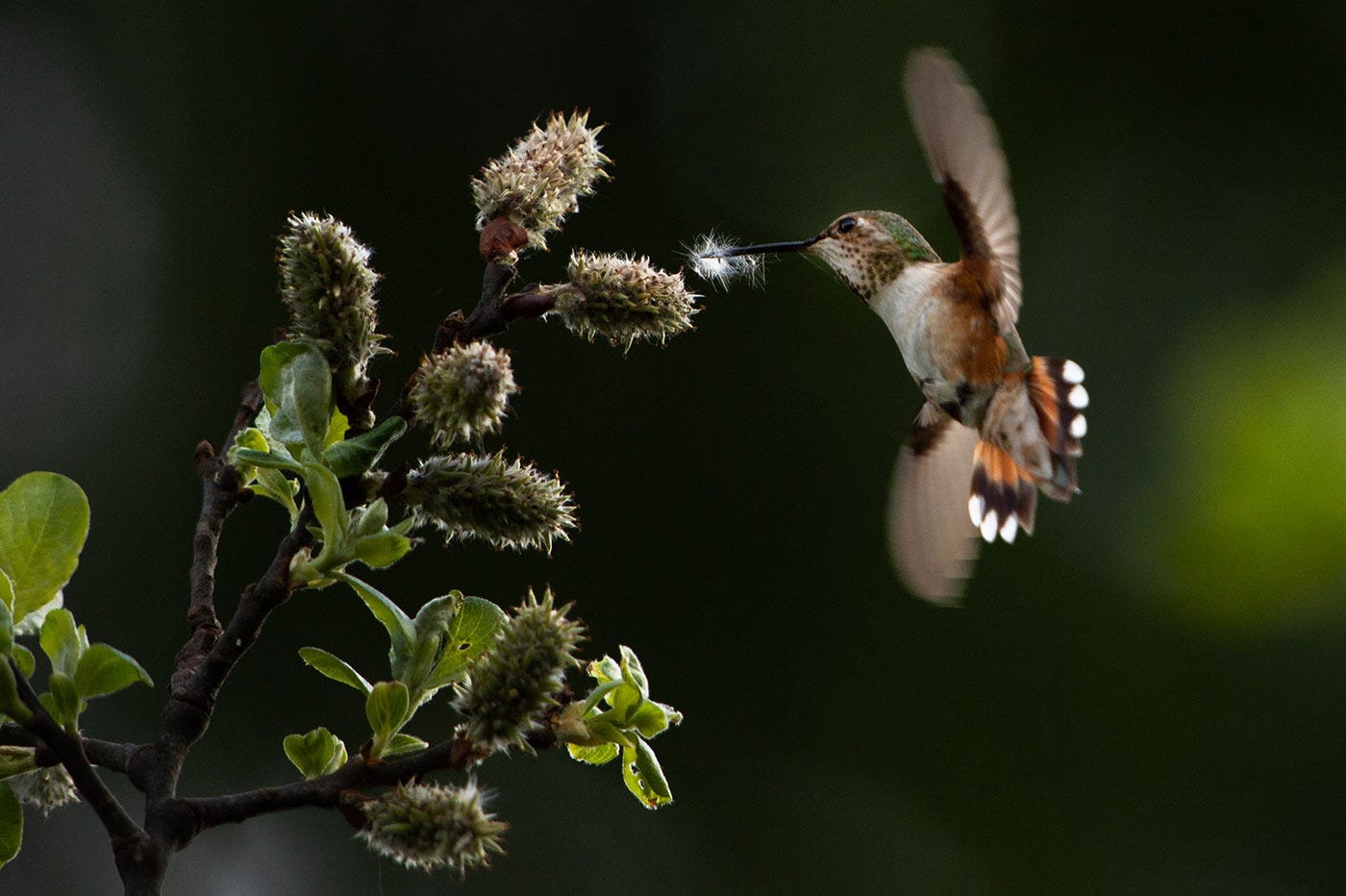
A few days ago I posted a note about an experience I had with a hummingbird while I was watering the garden;
“… a rufous hummingbird came to visit with me. They can be quite territorial and are known to intimidate interlopers in their spaces. But this one didn’t seem like it was doing that, it just seemed… curious? I stayed very still and took my finger off the hose trigger. The hummingbird got closer and closer. It got so close that I could see every detail of it’s tiny little body.
And then it landed on my hand. It’s possible that my heart stopped. It’s possible that the ocean stopped. The clouds, too. All I could see and feel was this tiny, beautiful, almost weightless living creature that had decided I was safe enough to land on.”
It was one of those mystical, magical experiences that we sometimes have with what we consider “the natural world”, even though we are, of course, every bit a part of the natural world ourselves.
The next day I was out riding my bike and honking1 up a long, slow, incline. I noticed a brown shape in the ditch beside me, and then a split second later realized that four, stiff, furry legs were thrusting out from it. I’m a sensitive wee soul, especially when it comes to animals, and I immediately felt my stomach drop, my legs lost rhythm, and I sat down as I rode by. When I rode by, tonight, the vultures were feasting. The circle of life, baby, the circle of life.
When we live in cities, surrounded by buildings and cars and people and concrete, we can become detached from the inherent spikiness of the “real” world, of the natural world. The weather isn’t as noticeable, the seasons come and go more gently, and it’s easier to ignore the shortening days, surrounded by the glare of electric light. As the background noise of the city increases everything becomes louder but the loudness also has a way of masking the spikes.
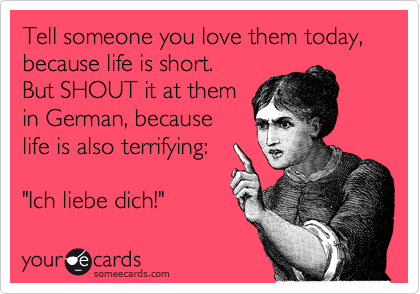
Rural living has no such smoothing mechanisms; you are never far from jaw-dropping beauty or heart-stopping sadness, it puts me in mind of this old internet meme:
Nature’s ‘yin’ is never far from the ‘yang’ and, in truth, life lives in these contrasts. The most common taijitu2 of that Chinese philosophy, seen in a million tattoos and pithy motivational memes, shows that both sides are part of the whole and that a part of the dark lives in the light, and vice versa…
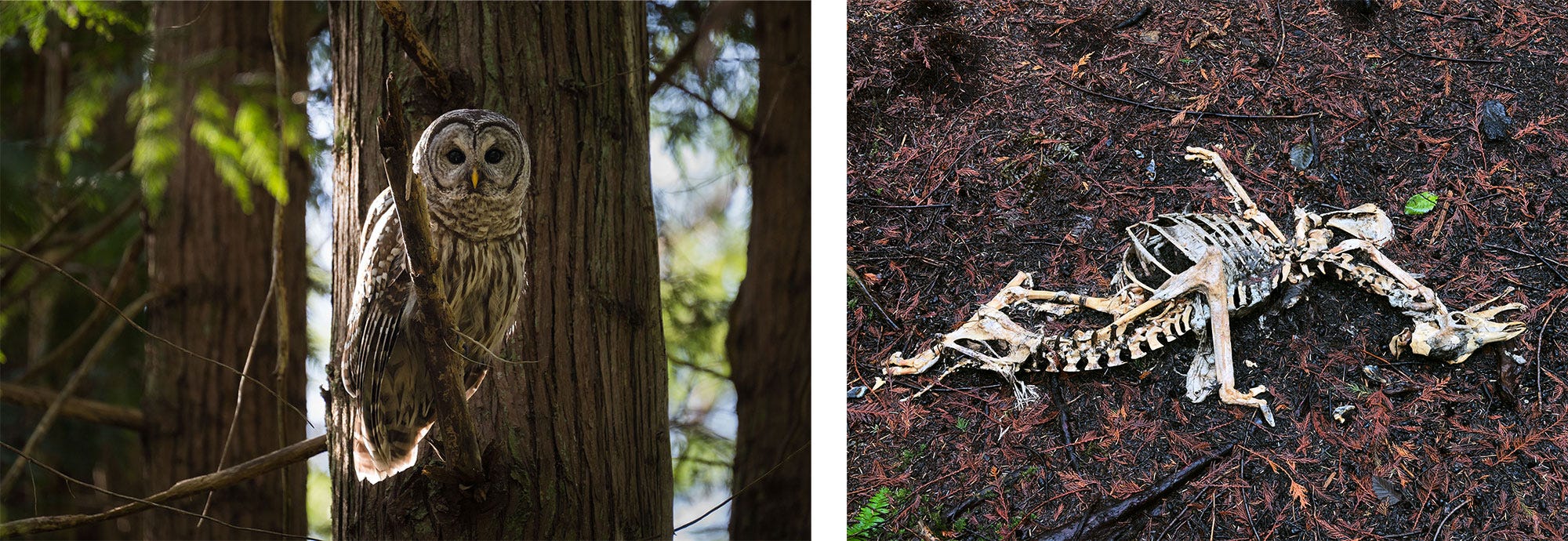
These contrasts are everywhere, in life; we need the darkness to feel the return of the light. The warmth of a sunny, clear sky day, is but nothing without the experience of a cold, wet, January. The cycling I’m doing, right now, is elevated by the core, painful, visceral memory I have of hitting the tarmac and cracking ribs and tearing rotators exactly one year ago.
The victories–big and small–only feel the way they do because the vast majority of our life is spent in either stasis, or, in fact, in losing. One of the greatest tennis players of all time, Roger Federer, gave a commencement speech at Dartmouth College a couple of years ago:
In the 1,526 singles matches I played in my career, I won almost 80% of those matches. […] what percentage of the POINTS do you think I won in those matches? Only 54%. […] even top-ranked tennis players win barely more than half of the points they play. The truth is, whatever game you play in life, sometimes you’re going to lose. A point, a match, a season, a job, it’s a roller coaster, with many ups and downs.
This past weekend Lewis Hamilton won his first race in a Ferrari Formula 1 car. It was the 106th race win of his extraordinary and illustrious career so (if you don’t follow the sport) you might be forgiven for thinking that it’s not that big of a deal. But the emotions across the paddock, across the world, from competing drivers and teams alike, were ones of happiness and joy. To understand why you have to look for the darkness that preceded this re-emergence, this burst into the light.
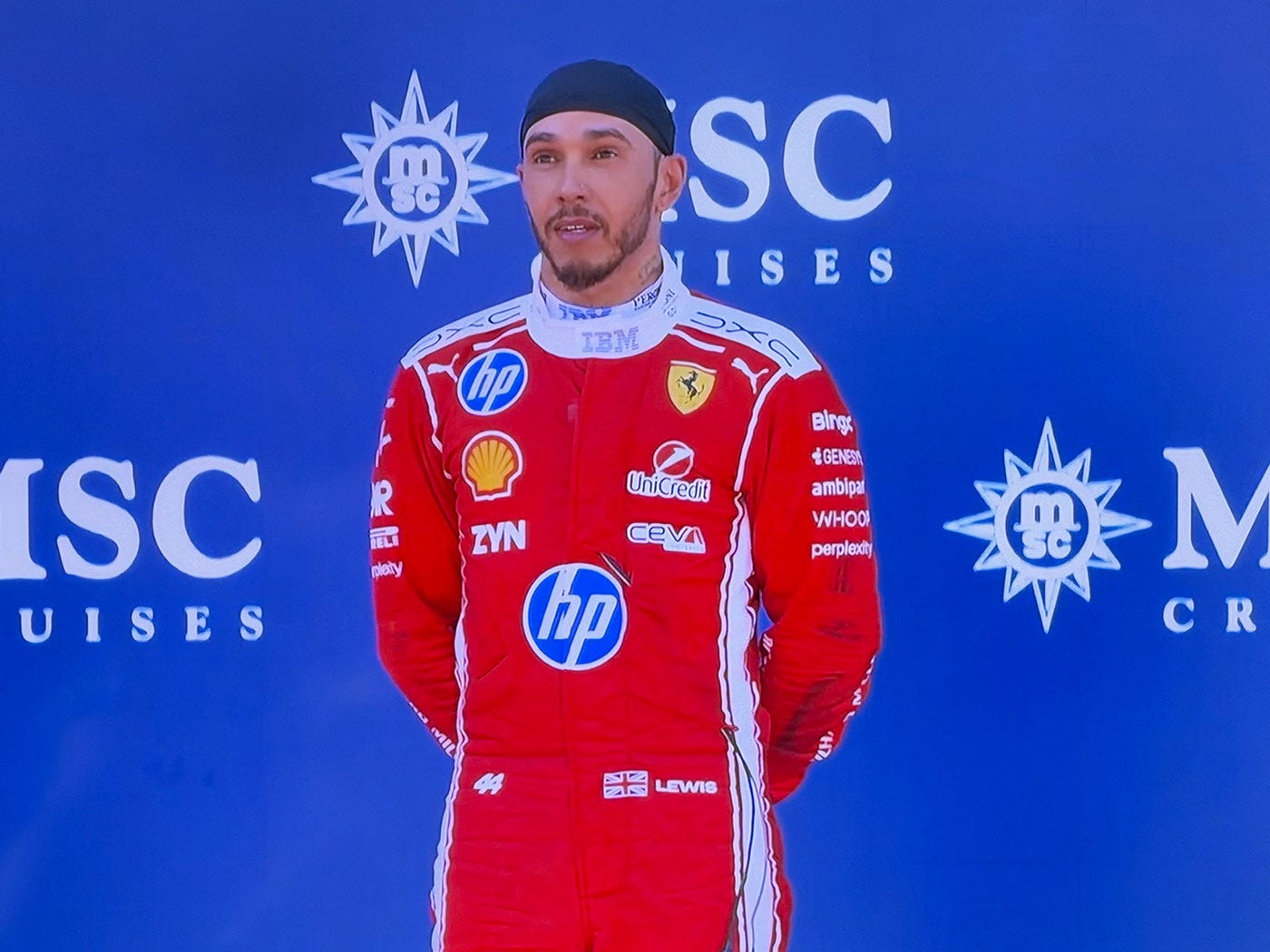
At the end of 2021 Hamilton was on the cusp of winning an unprecedented 8th world drivers championship but it was somewhat controversially snatched out of his hands in the last moments of the last race. From that point on he was in the darkness3. He won no races the following season, nor the season after. In 2024, having already announced that he was leaving Mercedes for the storied Scuderia Ferrari, he managed to win both the British and Belgian GP’s. Then came 2025, Lewis Hamilton in red, racing in the the prancing horse, what a story!
It was a disaster.
No wins, no podiums, and his lowest points tally in 16 years. He seemed defeated, confused, struggling to find himself. Everyone figured he was done, he was 40, after all, and F1 is often a young mans’ game4 these days (the 2025 world champion was 15 years his junior). In interview after interview he seemed more and more defeated, fractured by his inability to overcome the challenges and the demons that he has spent a career dominating.
But he went away over the winter and reset his mind. He remarked that someone said to him, “remember who you are”. Throughout this season he has been rising back up5 race after race, this win being the ultimate breakthrough that came from his work. In an instagram post after his first Ferrari win he wrote,
There have been dark times, times where the negativity won out and I felt useless and hope felt impossible. You all told me to remember. To remember to fight, to remember to keep going. To remember who I am.
Darkness and light is also, of course, a critical part of visual art. The work of sixteenth century Italian painter Caravaggio is often startling because of his remarkable use of “chiaroscuro”, which translates as light-dark. Light out of dark can feel like the subject is coming towards you, darkness on light can feel like it’s falling away. In my own photography there is nothing that excites me more than something lit, in the foreground, against a dark background. But the other way around is also thrilling. It creates interest, it is drama.
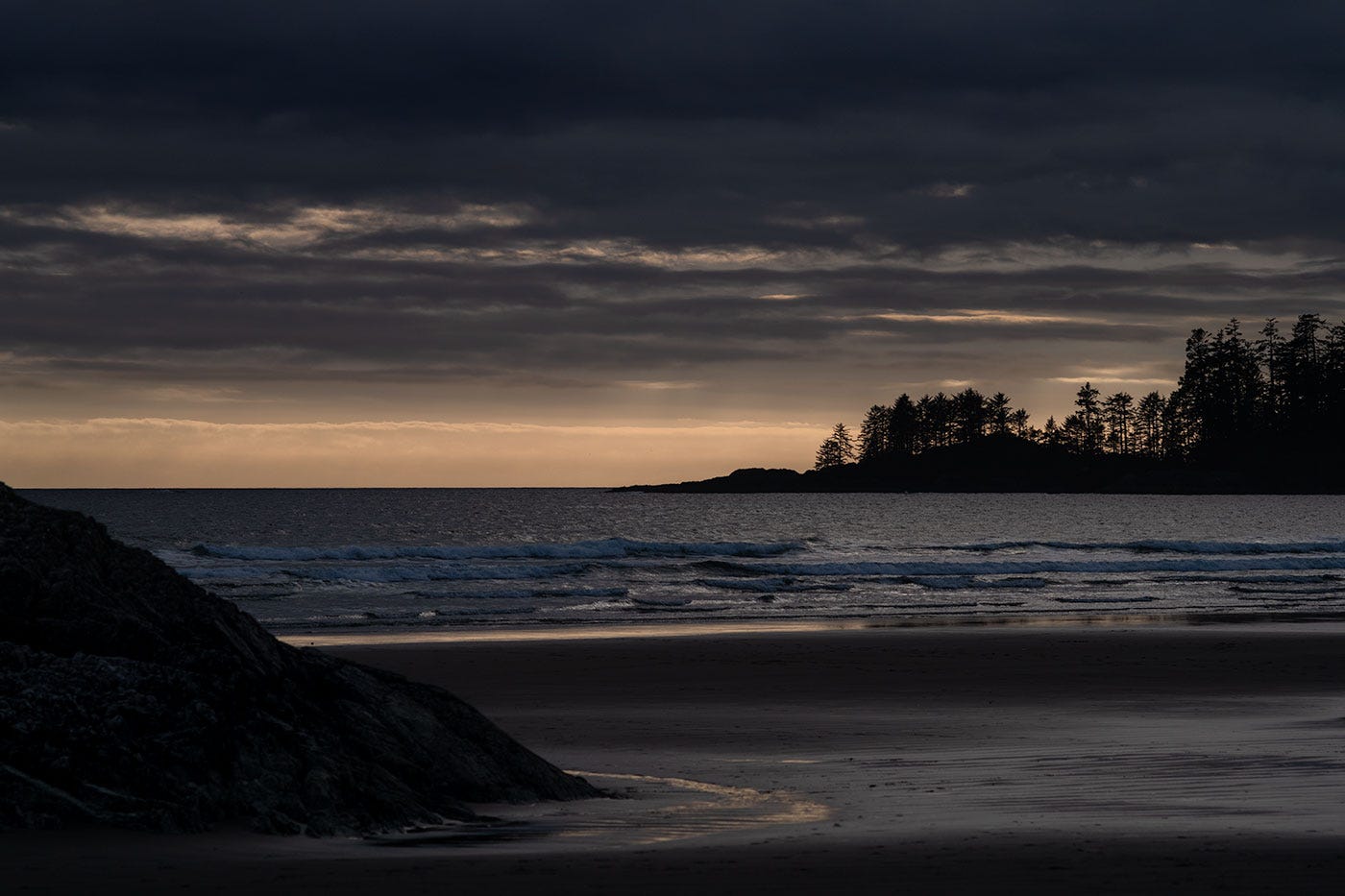
Images that lack shadows often lack depth, lack weight, which is not to say that they have no power, but it’s a different power. Photographers often talk about “chasing the light” but light leaps from the image when there is also shadow. Just about every tool in image processing software is, at some level, working with the contrast of an image.
Music, too, needs contrast. Think about some absolute bangers from the past; “Song 2” by Blur, an exercise in light/shade. “Smells Like Teen Spirit” by Nirvana, same. Classical music is written with pacing explicitly laid out to create the contrast and movement, largo, adagio, allegro etc. And also additional notes for how to play, con brio, lamentoso, furioso, to name but three.
In the late 1990s there was an era which is known in music engineering circles as ‘the loudness wars’. Loudness demands attention and mixers and engineers fought to make their artists, their records, as loud as possible in order to stand out from others. They did this with a tool called “compression”, something that makes the quiet parts loud and allows the overall loudness to be increased. The net result? Diminished dynamic range, ear fatigue, and a total lack of any light-dark. If you’ll excuse the pun, it was a dark time in the history of recorded music.
One of the most memorable nights of live music that I can recall goes back to early 2012 and seeing the Canadian duo Whitehorse at a theatre in Vancouver. The magic happened when, in a dark auditorium, they stepped away from their microphones, sat on the front edge of the stage, and sang without electronic mediation. The only light illuminating Luke and Melissa, and the only sound in an auditorium that felt like it was holding its breath, was their intertwined voices. Contrast and juxtaposition elevated the moment into a peak, core memory.
To complete the circle of life that started this fugue on nature, which comes as I wrestle with my own personal fugue, as I seek to remember who I am, I wanted to end with the story of my morning:
I got up, had an espresso, watered the garden (no hummingbirds), went on the rowing machine, then completed the first morning of my new weight training regime. Then I made up some granola and yoghurt and went to let Lola out into the garden.
But I stopped, with my hand on the door handle.
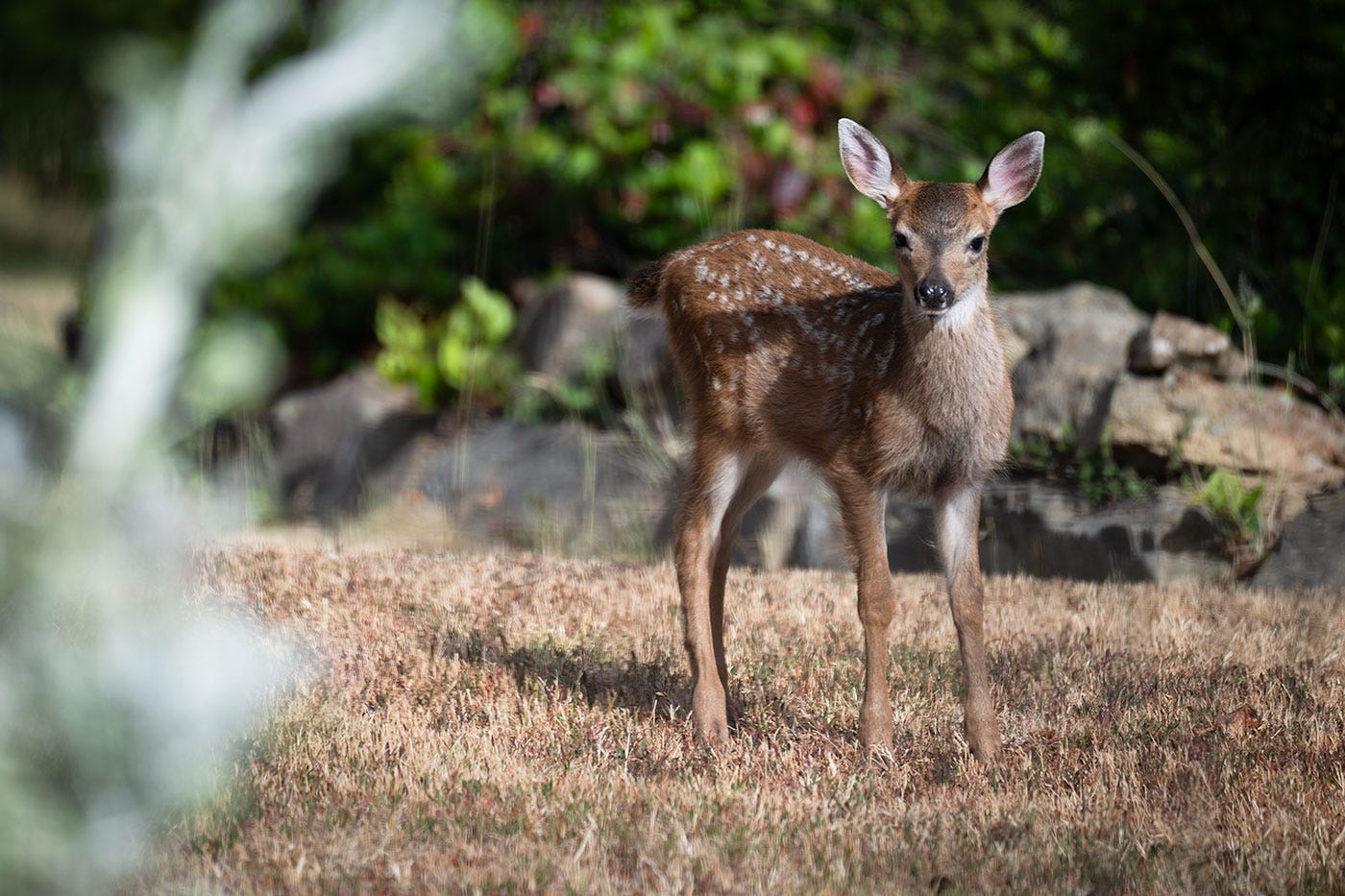
Right there, a few yards away, was a deer–not a surprise, we get them often–but there, behind her, looking like a brand new day, was a fawn…
There is life, and there is death. There is light and darkness, coldness and warmth. Throughout it all the world keeps revolving on its axis, and moving through space around the warming sun. Life can be sweet, but we only recognize the sweetness because we’ve all experienced the pain. Sometimes we shut ourselves away, to hide from the pain, to hide from the darkness, and in doing so we become trapped with the darkness and the demons. But as Leonard Cohen said, “there is a crack, a crack in everything. That’s how the light gets in”.
“Honking”, in cycling terms, means standing up, out of the saddle, when climbing.
☯️ representing the intertwined dualities of life in Chinese philosophy.
For various reasons, one being the controversial end to 2021, another being that the rules and cars changed into a car that didn’t seem to suit his driving style.
Yes, it’s about time women were in there, too.
He has “Still I Rise” tattooed on his back, a phrase he first heard in a Tupac Shakur track, but then discovered it’s roots in the Maya Angelou poem
Beautifully written, Martin.