

Eleanor Rigby
Where do they all come from?

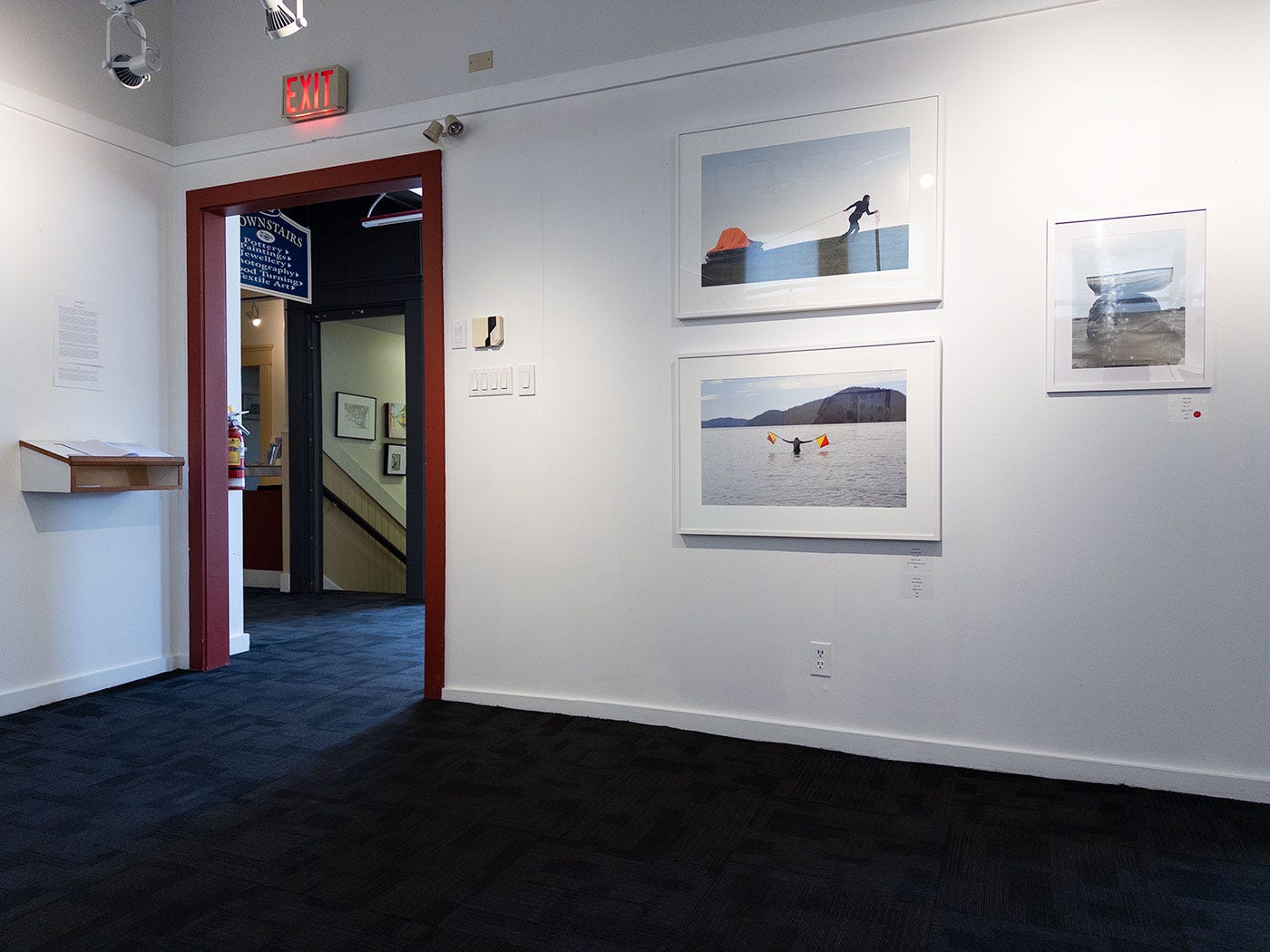
Eleanor Rigby picks up the rice in the church where a wedding has been
Lives in a dream
Waits at the window, wearing the face that she keeps in a jar by the door
Who is it for?
Paul McCartney was just 23 years old when he penned Eleanor Rigby, and it’s a remarkable subject matter for one so young, and a remarkable recording for a band that, barely three years previously, had released the somewhat saccharine, “I Want To Hold Your Hand”. He once said that the idea for Eleanor Rigby came to him after he used to sit with–and go shopping for–an old lady who lived near him.
It is, of course, a song about the lonely, and the arc of the song is in three distinct chapters; the first about lonely, unseen Eleanor, and the second about lonely, undervalued Father Mackenzie. But the kick in the nuts is the third verse, which brings the two characters together but separately, and only in death, when it’s all too late to make a meaningful connection that might change their lives.
Also, somewhat incredibly, all of that acute observation of the human condition is packed into an exquisite song that is just a hair over 2 minutes in length. Take a listen, if you haven’t heard it in a while:
We’ve all heard that there is an increasing loneliness epidemic, especially among males, but one of my first memories is wrapped around the idea loneliness, from over fifty years ago. I remember being very young and walking in the Old Market Square with (probably) my mum. There was an old guy in the square feeding the pigeons. I cannot remember his face or his clothing but I remember his bag. It was a very particular kind of bag that was around at that time (this would be the early 1970s) although it seemed dated, even then. It was a simple bag made of just two squares of a nameless brown “leatherette”, stitched on three sides with two simple strap handles. Without seeing inside I can close my eyes and picture–and feel–the lining. And the bag looked empty. I don’t know why that moment struck me so hard, or why the image seared into my young memories, but I remember that it seemed almost unbearably sad. He seemed so lonely1. I also remember feeling that I wanted to avoid that fate, of being old and alone, in an empty square, feeding pigeons, and carrying a sad empty bag, I didn’t want to be a ‘sad sack’, perhaps?
Father McKenzie writing the words of a sermon that no one will hear
No one comes near
Look at him working, darning his socks in the night when there's nobody there
What does he care?

I was standing on a pier, a while ago, and got chatting to an older fella who was fishing. He was vacationing with his wife and he told me that he always brings his rod so that he can do his thing and she can go off and do hers. He said that they were there because she wanted to come, and that she wanted to go visit some sights. He wasn’t interested in any of that and that’s why he brings his fishing rod.
The chorus of the Rush song, “Entre Nous”, contains the lines.
Just between us
I think it's time for us to recognise
The differences we sometimes feared to show
Just between us
I think it's time for us to realize
The spaces in between
Leave room for you and I to grow
The spaces in-between, when matched, when founded on solid ground and enveloped in security–both in ourselves and within our relationships–are the places where we find individual growth. But this didn’t sound like they were happy in their worlds, that they were making space for each other’s growth, it just sounded unbalanced, resigned, just two people orbiting each other in separate worlds.
Eleanor Rigby died in the church and was buried along with her name
Nobody came
Father McKenzie wiping the dirt from his hands as he walks from the grave
No one was saved
I went for a walk, one day, in a small town on Vancouver Island, and saw quite a lot of people out doing the same. They were almost entirely solitary people, walking alone, or with a dog. And they were mostly older men, strikingly so. Is there a connection between the loneliness epidemic and dog ownership?2 The only pair of males, I saw together, out walking, were not white. I have traveled in countries where completely heterosexual men are quite happy to walk with their male friends holding hands, where they greet with a kiss3, where physical closeness isn’t coded with any sexuality. There has to be a way for men in western spheres to feel the same, no? To bond through affection and touch, and not just the punch on the shoulder or head noogies kind of touch?
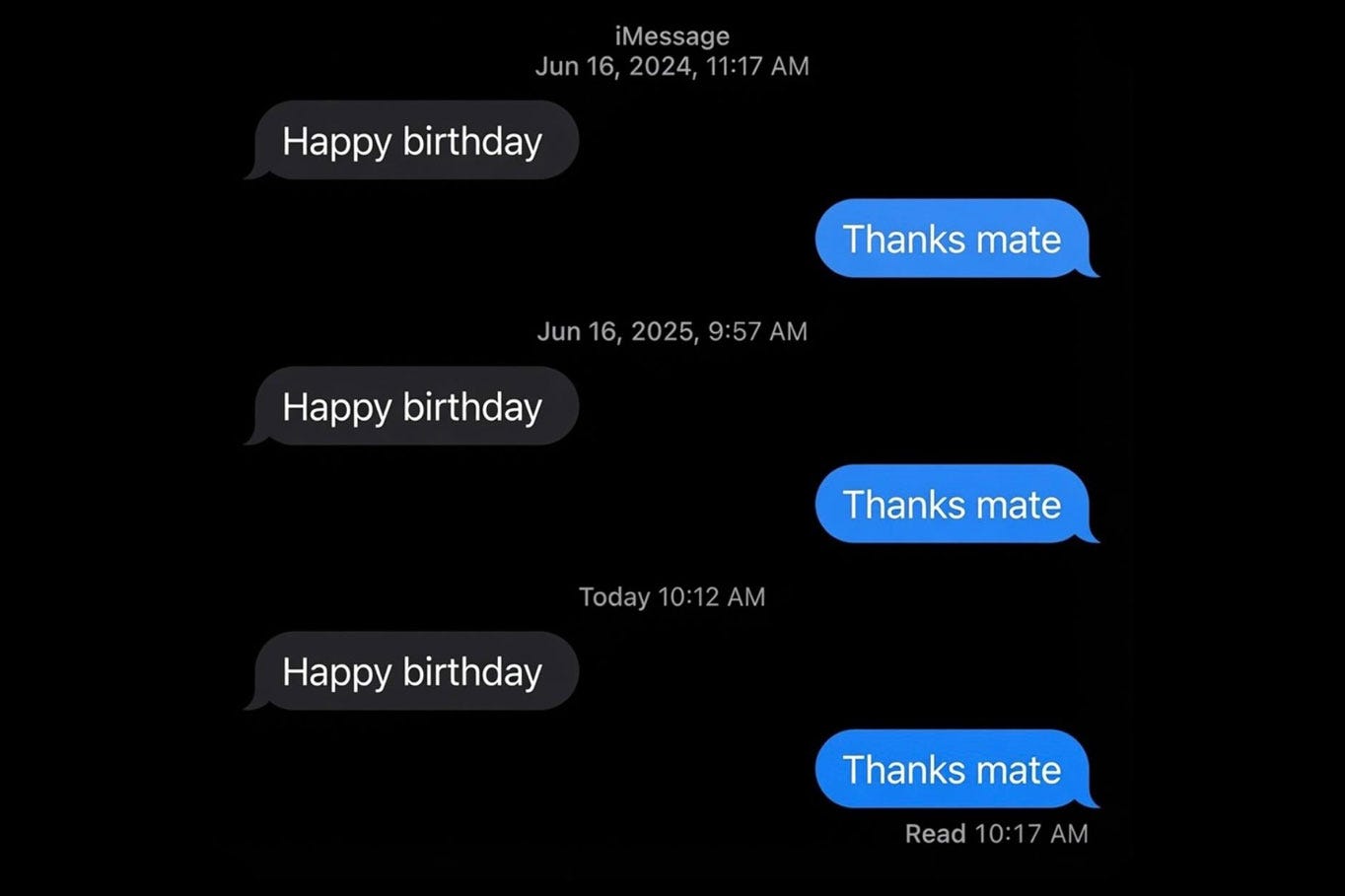
I was talking to a new friend, while walking the other day, and we were talking about male loneliness, and he remarked that he believed our island to be full of lonely men, both single and those in marriages.
The circle of men’s friendship is often quite small, but it is increasingly clear that men are going to need other men in order to break this cycle of loneliness. I was listening to the always excellent Sam Fragoso on his Talk Easy Podcast, talking to Alanis Morrissette, and she had this to say,
“[…] I think men need male leaders because for a long time women were like, oh, we got you. We’ll usher you into some new eras. And I think those days are done. So if hetero men need support, they’re going to need to find it from other hetero men. We’re done.”
Unfortunately this need for male leaders is allowing a small subset of men to inspire a cohort of lonely men in all of the wrong ways. It is very easy to lead when you are able to tell disaffected, lonely people, that all of their problems are someone else’s fault.
I sat writing the first draft of this article outside of a cafe, mid-morning of a beautiful May day:
There are quite a few people here, in small groups and pairings. Almost every single cluster is female. There are 12 women in front of me, at three tables, and most of them seem to know most of everyone else. There was only one other man here and he was sitting with, presumably, his wife. The social setting, here, is all female. Of course I do see groups of old guys sitting in cafes from time to time, they have their regular “lunch bunch” meetings, guys that all used to work at “the plant”, or who golf together. But you can’t help notice the effort that these women, here, are putting in, to maintain and grow the friendships in their life. I’d like to ask them how they do it, but of course they don’t need some random man interjecting into their social time.
Stop press: One of the ladies stopped by as she was leaving and I told her that I was envious of her group. Apparently they all go to a Zumba class that her daughter gives, and with that she gave a little latin dance flourish. Delightful.
All the lonely people
Where do they all come from?
All the lonely people
Where do they all belong?
So these are the questions that McCartney4 asked in Eleanor Rigby. He didn’t make a distinction between male or female loneliness at the time. But where do they all come from? How did they get this way? Is it a choice? Circumstances pressed upon them? Default behaviours?
There are many theories and opinions, just this past week I was listening to writer Derek Thompson discussing ‘the anti-social century’ with Scott Galloway About how the decrease in social structures and face-to-face socializing is changing everything about society, relationships, and communities. We are living in an era where people are coupling less, separating more, and increasingly living alone. And this is something increasingly promoted as a goal, in online discourse, ignoring the fact that humans have shown long evolutionary evidence of natural pair bonding both inside and outside of reproduction needs. I feel like this is something that I will be returning to, in my writing, in the coming months, because I fear that we are pursuing a path that we aren’t, perhaps, designed to follow.
I have my own opinions about the loneliness of men; I think most of them drop into the giant pond of college-age friendships and establish bonds there that last a lifetime. They may pick up a male colleague friend or two along the way but they are mostly done. They get married, they have kids, they might move away, and family becomes mostly everything, leaving little room for much else. Then, of course, when kids have flown the nest, or wives have departed through death or divorce, they find themselves often far from home, far from their roots, and far from companionship.
Where do they all the lonely people belong?
I saw an internet meme, a while ago, and it struck me as being elegantly clear about love, about long term love, and about the simplest connection of the companionship in love:
I think the purest form of love is just wanting someone to notice life with you. “Taste this. look at that. hear this song.” Again and again, until you can’t imagine noticing life without them.
This is, I think, why I took up photography; I notice the world so deeply that I have wanted to share it, to say to anyone and everyone, “look at that!” And I have wanted to share that with my life partner more than with anyone else. A thousand social media “likes” are but nothing to the simple smile of a partner.
In this respect I have loved fully.
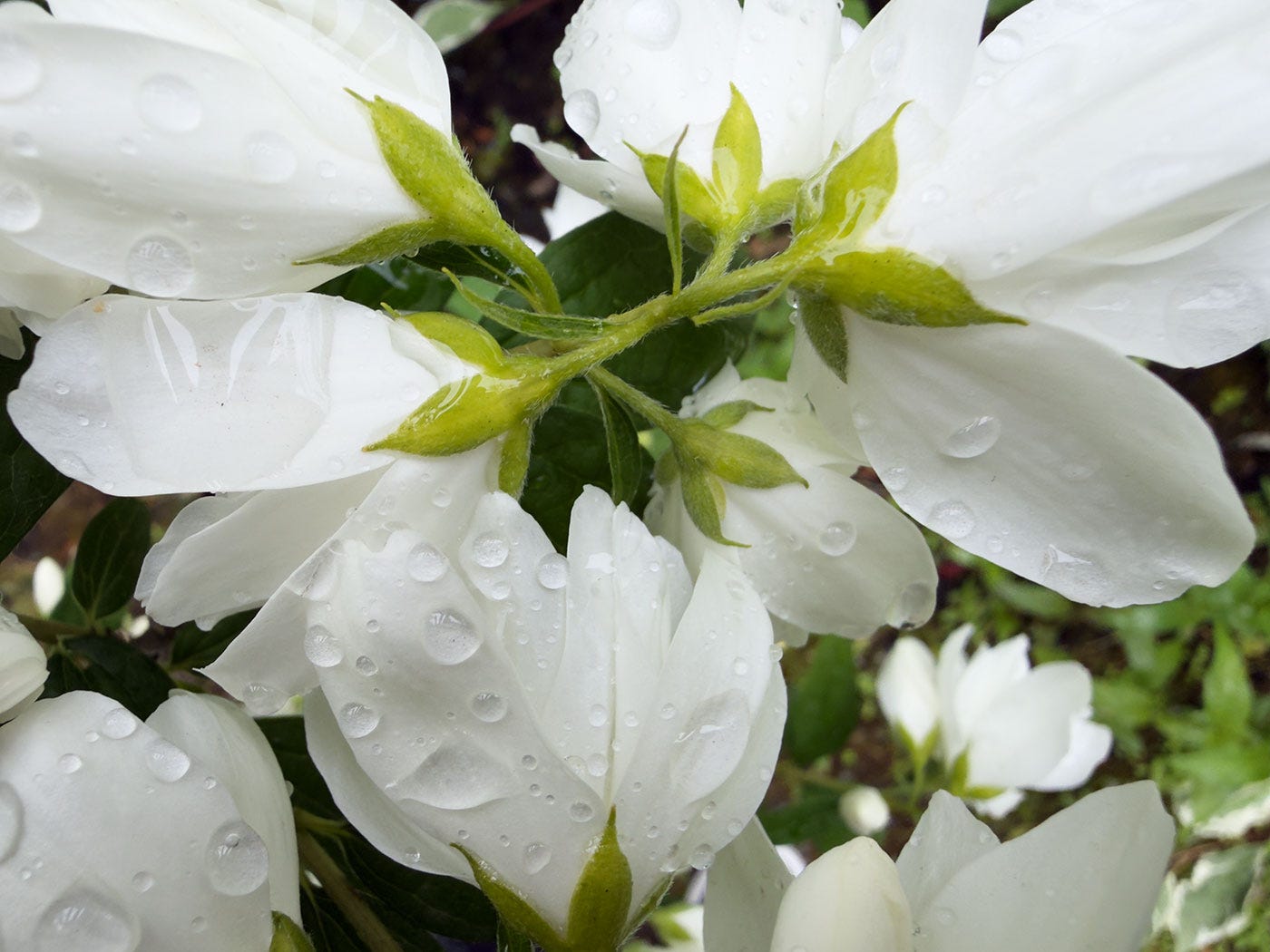
To go further than the meme, something that changes over time, is that your senses commingle in a way that makes you notice things differently because you start to understand how another person would think about it; oh, they would think this is hilarious, oh, they would love this, this will give them “all the feels”.
The shared language of time isn’t words but in the shared knowing of another person.
Of course the stinging corollary to this, to notice but not have anyone to share the noticing, is one of the darkest wells of loneliness. And to feel your heart swell, when you see something that you know would be meaningful to someone, only to turn towards the ghosts of the past, is the deepest and darkest of wells.
🖤
Carly Butler’s work can be found on her website, here, and the Old School House Arts Centre website is here.
Of course I was projecting my young, unformed thoughts on to another human being, he may have been totally fulfilled in his work, happy in his marriage, and just out feeding the pigeons.
Thirty years ago, in the US, dog ownership represented just over half the population, today it stands at two thirds.
It took a while to get used to it, but I liked “la bise”, in the morning, the act of cheek kissing in French culture.
I have read that George Harrison came up with the “ah, look at all the lonely people” refrain.
I really enjoyed this, Martin. It felt less like an essay about loneliness than about the quiet human need to share what moves us. It even had me thinking differently about photography. By the end, I wasn’t thinking about Eleanor Rigby anymore. I was thinking about the people in my own life. That’s a difficult thing to pull off.