

A New Friend
And the things we learn along the way

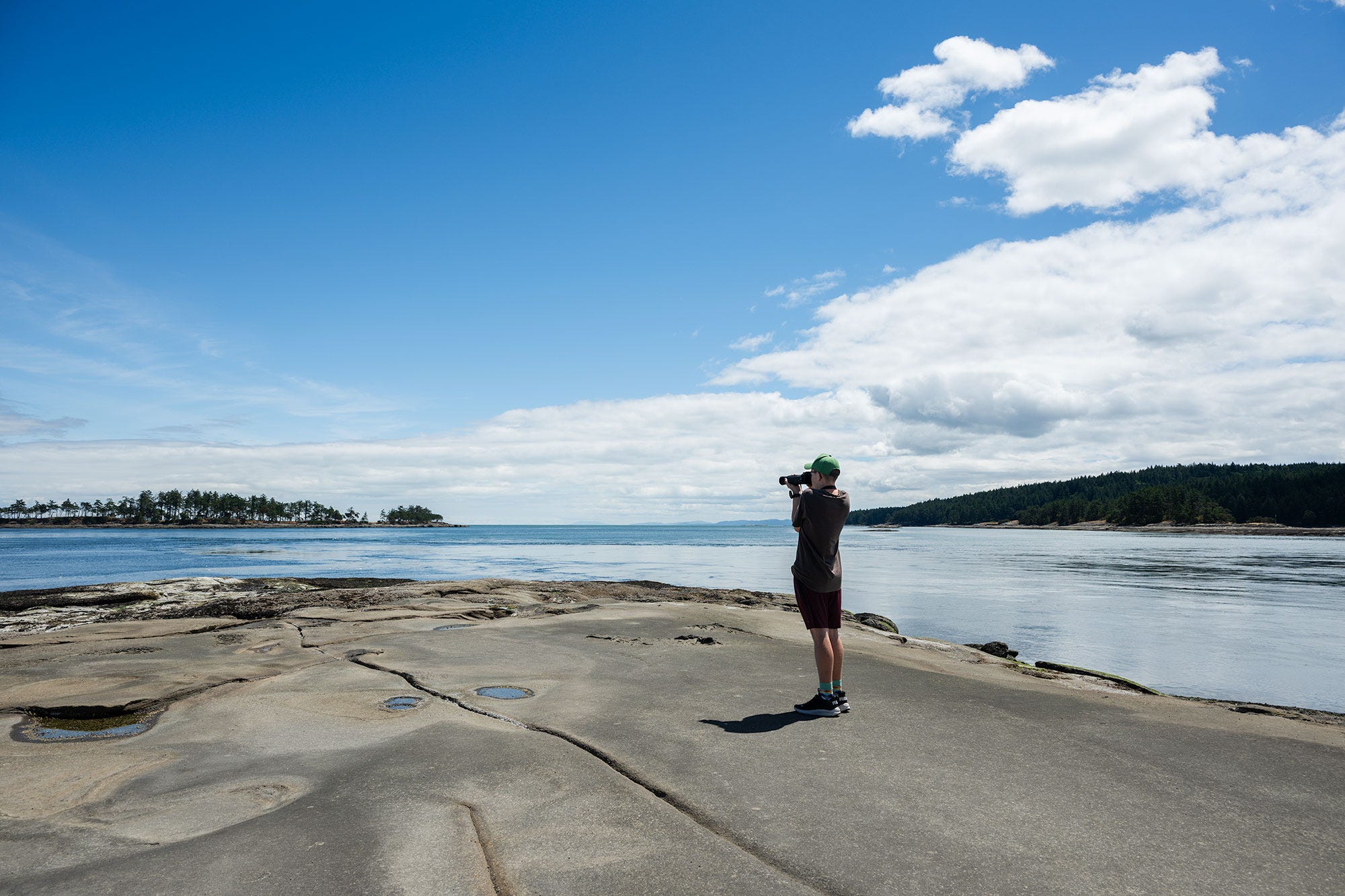
I recently made a new friend, and I know he’s a friend because he texted me and said, “it’s your friend M”. He’s not like anyone else I know because M is autistic.
I’ve not really spent much time around neurodivergent people. Way back in the long ago I remember doing a juggling gig1 at a school for special needs kids, and I remember it being immensely fulfilling. I was supposed to be doing a regular show and I had a “bit” where I’d hand an audience member a club, they’d throw it, and I’d catch it straight up into a juggle. So I did that bit. Then someone else in the crowd asked if they could throw a club to me. So I did it again. Turned out that this was a lot more fun for the kids than the regular show, so pretty much everyone in the crowd had a go. It was a lot of fun, and the hugs and thanks after I’d finished were some of the most heartfelt that I can remember.
But we neurotypical types often tend to be fearful around people who are different in this way, and in that I am no different. I wonder if I’m saying or doing the “right” thing, as if I’m going to make a mistake. I wonder if I can handle it at all. I wonder if I’ll have the patience, the ability to understand their point of view. Will I be able to handle the inevitable challenges that come with the territory? But when we spend some time with someone different we sometimes learn as much about ourselves as we do about them and, when you look to their abilities, rather than any perceived disabilities, you realize that there is magic in there, too.
I’ll preface this by saying that I’m not suddenly an expert in all things autism. I’m not even an expert in the particularities of my new friend, but there are things that you see, hear, and notice, that you realize you’ve heard people talk about when they talk about “people on the spectrum”; this alternative wiring might create challenges but it can also reveal some startlingly interesting things about how the human mind can work2. You realize that there might be things one can do, as a neuronormie, ways of being, that they perhaps cannot, but you also realize that this difference can create vividly different ways of being and thinking that can seem like superpowers.
For one thing it appears that my friend can look out to sea, spot a ferry, and know what the name of the ferry is, even from miles away. We have a new ferry on our route and it has an indigenous name, gifted to the ferries by the local Snuneymuxw people. As is often the case I need to find the phonetic description of the name to stand any chance of pronouncing it correctly. In the case of this ferry I’m still struggling even with the phonetics. M, on the other hand, had looked up the pronunciation, committed it to memory, and it tripped off his tongue like he’d been saying it his whole life (he also knew all the times when THAT ferry, rather than the slightly older ferry, was running, because who wants to ride an old ferry?)
When M and his family came to visit, we were touring around the island and we drove up a very large hill that is on one of my cycling routes. When I was texting with M, the day after, I told him that I’d just cycled up it again and asked if he remembered it. Not only did he remember the hill, he also knew (and correctly spelled) the name of the road… which I’m not sure had even been mentioned when we were driving it.
M also doesn’t have the same filters that are often drilled into us from an early age. He can ask questions with an eye-popping directness, which places the onus upon you as to how to react to the question. I found myself unbalanced by it, but not in a bad way. It feels like it strips away the carefully curated pathways of answering that we have inevitably trodden throughout our lives. In this rawness there is an imperative to stop, think, and explore the actual answer, the truth within us. Sometimes the pathways we have worn are more about self-protection than they are about telling the truth of ourselves. And it can be liberating to be straight with someone who is not judging you.
We live in a world where the “othering” of people is used as weapon for those that seek power but in truth the power lies in getting to know people who are different to us. Being open to people who live, love, pray, and think differently to ourselves is a journey to discovering all the colours of the spectrum, and we all live within the glories of that beautiful rainbow.
It’s hard to hate anyone,
When you know what they’ve been through,
Once they’ve given you a taste.
“Crack the Case”, Dawes.
Unconditional Love
For years I’ve rolled my eyes and scoffed whenever I’ve heard someone saying, within the realm of romantic love, that they just want someone to love them “unconditionally”. I bet you do! What nonsense. Romantic love is conditional3 and those conditions change, ebb, flow, and are met with acceptance or rejection over the course of a lifetime. If you become an entirely different person, to the person that someone fell in love with, then the conditions have changed, and it’s up to the other person to decide if those new conditions are something they can still love. Perhaps they can, perhaps they cannot. Sometimes the conditions are a momentary aberration, sometimes they are not. Sometimes we can do things about the conditions and, again, sometimes we cannot.
The only kinds of unconditional love, in my opinion, are the ones between parents, children, and siblings. And sadly that is not always a given, either.
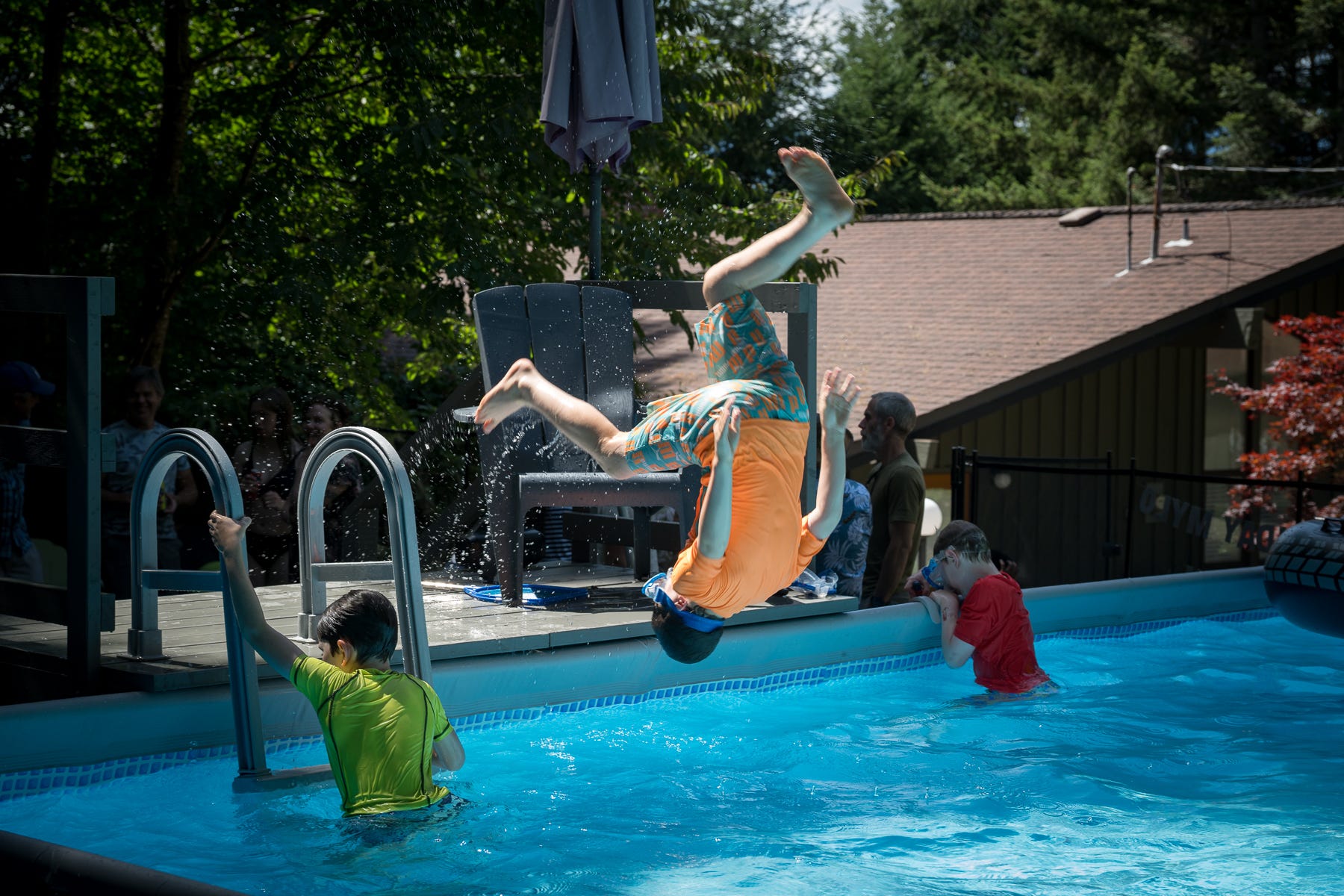
I was stoked that my new friend, and his parents, invited me to his birthday party; M just turned 16 years old. I was, to say the least, out of my comfort zone. I’m nearly 60 years old, I’ve never had kids, I’ve not been around other peoples’ kids that much, I’m not even an uncle. And this was not just kids, this was M’s friends, most of whom face their own challenges, have their own needs, from neurodivergence to physical disabilities.
Turns out that it was a lovely afternoon in many ways, difficult for me in others, but as usual I had my trusty camera to hide behind if needed. So I observed, I watched, and I noticed. The more I saw, the more it seemed to seep into my soul. There was a beauty and depth to it that was moving. I felt like I was in a small garden filled with unconditional love and commitment. Parents who had faced challenges the like of which I cannot possibly know (although I am listening and learning from my friends’ parents). There were dynamics that I couldn’t begin to fathom, like that between siblings when one has special needs and the other does not. And there was kindness and grace shown to me, a complete outsider in that place, that made me feel welcomed.
The next day I sat down to edit the images I’d taken, and I’d taken a lot. One of the reasons that I’d taken so many was because everything seemed so fluid, things changing from one second to the next, and I needed to know that I’d caught the “moment” in all of these moments. One of the roles of a photographer is to try and understand the subject before you, to try and figure out what you’re looking at, to recognize when the head, the heart, and the eye line up4, and you enter a split second of “there it is”5. I was trying to get a few candid images of M, too, but another super power of his? He can find me anywhere in a crowd…
It was the most emotional edit of images I might have ever done. The still images allowed me to step back into those moments without the shield of the camera. I could observe without intruding, I could explore the moments and how they made me feel, and they allowed me to feel the beauty of the unbounded love that was all around me. I feel like the entire experience cracked me open in ways unexpected but wonderful.
It was a humbling experience, and one for which I am truly grateful.
🖤
That’s a life chapter for another time… maybe?
Temple Grandin was one of the first autistic people to write about these insights.
Which is why we don’t simply date everyone we meet, why we are “picky”, and also sometimes why people break up.
“It is an illusion that photos are made with the camera... they are made with the eye, heart and head.” - Henri Cartier-Bresson
Also related to Cartier-Bresson and his “decisive moment”.
That was a wonderful read Martin, thank you for sharing
"...but in truth the power lies in getting to know people who are different to us." Amen, brother. Another beautifully written piece. Thank you for sharing.